About Evergrove
Evergrove’s purpose is to help write stories that end with hope, meaning and dignity. We envision a future where we remember our loved ones through the natural world around us: the Evergrove. Evergrove will be one of the first human composting providers in Australia, where the process is now called terramation in law, and we aim to eventually operate in other parts of the world.
We were the first Australian human composting company, founded in 2023, and have been working hard to research, advocate and build the partnerships necessary to bring terramation to Australia and hopefully across the world.
Our human-centred design approach means we design with community rather than for them, informed by extensive research, engagement and co-design wherever possible. Since 2023, we have been listening to a diverse range of voices across industry, government, faith and cultural groups to inform what the future of terramation should look like in Australia and beyond.
Evergrove is adopting a social enterprise model to put our people and planet first. We will reinvest the majority of profits back into furthering our mission, and are a certified emerging social enterprise with the Social Enterprise Council of NSW & ACT. We are a pre-revenue, pre-investment venture seeking capital now that terramation is on its way to being legal in NSW. The Bill passed both Houses of Parliament on 21 October 2026 and awaits assent, and the terramation provisions commence two years after that, so the earliest it could be offered is 2029. We hope to be operational by 2030/31, though that is only an estimate at this stage.
Our team
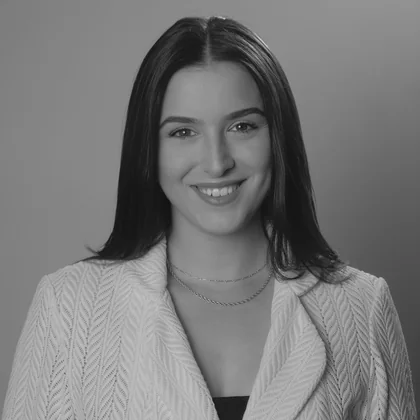
Aria Kapaniris
Founder & CEO
Aria is a UTS alumna bringing nearly 10 years of business experience in strategy and delivery across customer strategy and research, program management, and major infrastructure procurement and contracting. She is a passionate systems thinker, service and human-centred designer who has delivered Evergrove’s work to date, inspired by personal experiences with loss.
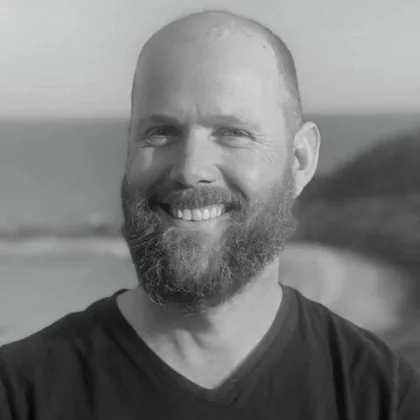
Luke Hamilton
Terramation Operations Manager
Luke brings 15 years of experience advancing sustainable circular technologies, including pioneering some of NSW’s FOGO programs and running CSIRO scientific trials on compostable materials. Luke has been with Evergrove since our inception in 2023 and will lead terramation operations once we begin scoping construction.
Our founder’s story
“What if for every grave there was a tree instead?”
It takes courage and vulnerability to look death in the face, but it’s a core part of the human experience that we all share. The more we understand and talk about our grief stories, the less power that fear has over us and the more we can connect with each other, and ourselves.
I’ve been scared of death from a young age and that’s where my calling to this work started. I was 5 when I witnessed death for the first time. We lost my great grandmother, Oma Evelyn. Arriving at the cemetery, I immediately didn’t like how it made me feel. It was cold and scary, and nothing like Oma. Then I saw a grave with a photo of a little girl. She was 5, just like me. That day left me with a lot of questions about death but particularly a sense that I didn’t want to end up in a place that felt like that.
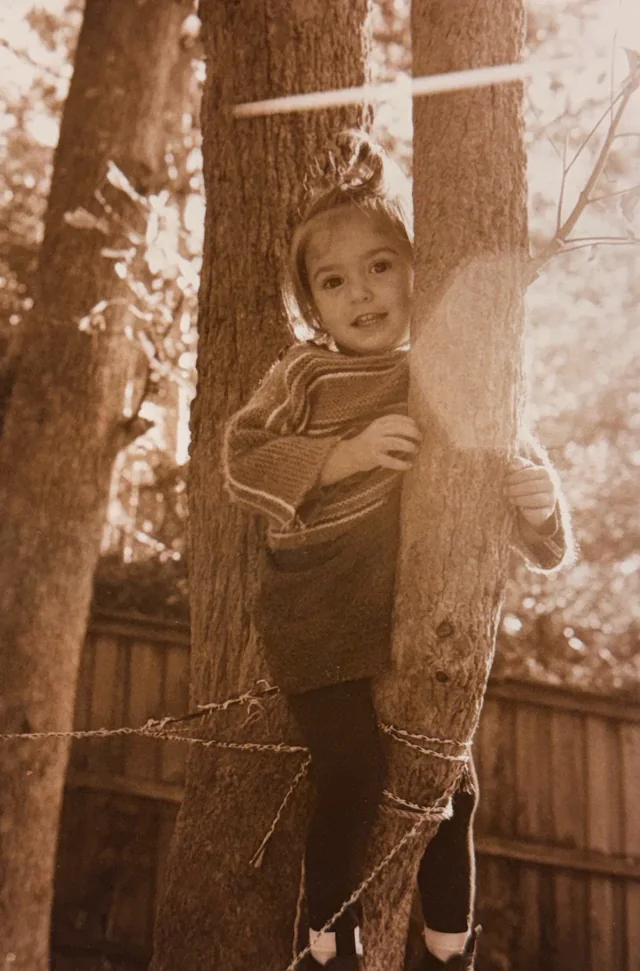
My happy place as a kid was climbing and swinging in trees, especially on a particular Moreton Bay fig tree in Centennial Park that’s still there today. I think that’s why, when I was 12, a question popped into my head as we drove past a cemetery.
It stayed with me for a long time. Then in 2023, my grandma Christine survived a heart attack and the conversations that followed prompted me to start properly researching the end of life space, not knowing where it would take me. I had two questions:
- Why are burial and cremation our only main options?
- What might the end of our lives look like if it were designed around our people and planet first?
What I didn’t know then was that a few months later, on the only occasion I stayed back late at the hospital by myself, grandma very suddenly declined. It was so unexpected and quick that I ended up being the only one with her when she passed away.
That was the year I helped organise my first funeral and the first time I’d seen, touched and cared for a dead person. I specifically share that because in Western Society, the average person goes through life without ever seeing or touching a dead body outside of a highly sanitised, formal funeral setting. I started Evergrove the same month we buried her. A year later, nearly to the week, we lost my grandma Dorothea and I organised my second funeral, but it was my first experience with cremation.
As a twenty something, I think it’s fair to say that we expect to lose our grandparents first but the thought of losing a parent just isn’t on our radar. It certainly wasn’t on mine but in May this year, my mum Theresa was very suddenly diagnosed with stage 4 lung cancer that had metastasised in her brain. Exactly 8 weeks later, mum passed away. She was 52.
One of my most formative experiences was being mum’s doula at the birth of my sister when I was 12. Like me, my sister was a water birth, but uniquely, she was also a home birth. Mum’s final wish was to have a home death, and it was a gift to be her doula at home one last time to ensure she passed peacefully, surrounded by those who loved her.
Mum had many talents, but her greatest was music. To honour her life, we released her song ‘Forget That Sorrow Tomorrow’, which she composed, performed and sang, in collaboration with Chris O’Brien Lifehouse to support lung and brain cancer research, particularly the Richard Scolyer Chair. If you’re able, I’d love you to listen and donate towards accelerating cancer research.
I’m still making sense of the last few years and I can’t believe mum is gone, but I know I have a calling to do this. I started Evergrove because I believe we can do better in how we honour the enormity of a life, and make that experience feel more hopeful for everyone.
Evergrove is working to bring terramation to Australia and hopefully across the world, a new option alongside burial and cremation. Uniquely, it gives us the ability to create living legacies like trees and gardens which heal something in both ourselves and the natural world, which mum made sure I understood we are part of. Our purpose is to help write stories that end with hope, meaning and dignity.
She was deeply supportive of this work, and had it been available in time, terramation is what she would have chosen. In the end, the plot beside her own mum happened to be available so we buried her there, as naturally as we could, with a beautiful wicker coffin right next to grandma Christine.
I dedicate this work to all those I’ve lost, but especially mum and my grandmothers. Requiescant in pace. Without you, Evergrove wouldn’t exist. As for me, I hope my story ends as a very old, happy lady who becomes a Moreton Bay fig tree so that I can bring joy to the next generation of little tree climbers.
To support our work, the best thing you can do is to join the movement on our website and talk about how you’d like your story to end with the people you love.
— Aria